
How to Power Up Your Finances in 2026?
Today is 28 June. Exactly four months ago, on 28 February, the world we live in shook.
The recent conflict that began that day rattled markets, grounded flights, softened property, and sent more than a few expat families home. Portfolios dipped, plans wobbled, and almost all of us felt the ground beneath us shift. It was genuinely a hard stretch, and there’s no use pretending otherwise.
But here’s what matters today: the worst of the shock has passed, a ceasefire holds, and the UAE is moving into recovery. And recovery is exactly when disciplined money decisions compound the most.
And remember, we’re only halfway through. With six months still left in the year, 2026 can still turn out to be the best financial year many of us have ever had. The first half tested us; the second half is ours to make.
This isn’t just a “look on the bright side” piece, though. It’s a plan. You power up your finances by taking control of what’s yours to control; and by genuinely believing the recovery is coming, because here, it always has.
We’ve Been Here Before
Cast your mind back to 2020. Borders shut. Flights stopped. Dubai’s economy looked, to many, like it might not bounce back. People left.
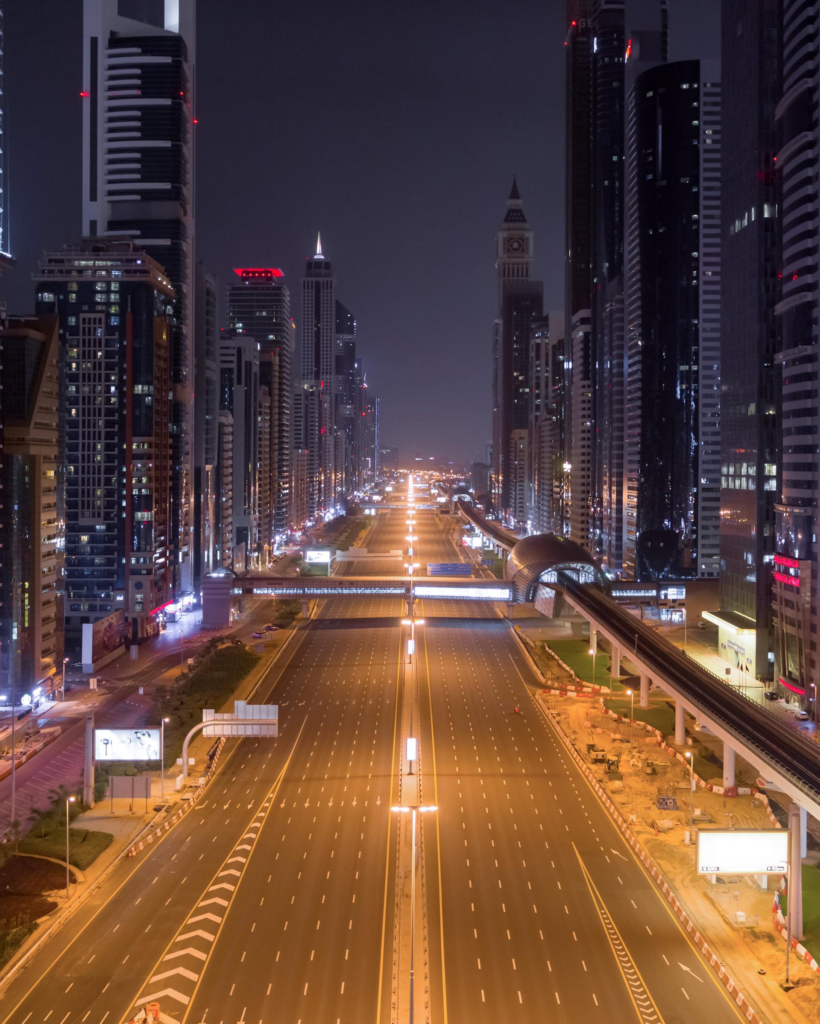
Then came one of the strongest runs the UAE has ever seen. Property hit record highs. Tourism broke records. Markets climbed. The expats who stayed invested, kept their plans intact, and bought quality while it was cheap came out of Covid in a far stronger position than they went in.
That wasn’t luck. It was a city built to rebound — and people who backed it.
The last four months were a different kind of shock, but the same pattern is already forming: a ceasefire holding, infrastructure being repaired, confidence rebuilding. If you’ve watched this place recover more than once, you have every reason to expect it again.
The real test of a nation is how it holds up in difficult times. Of all the Gulf states, the UAE absorbed the heaviest barrage of the conflict — the most-targeted country in the GCC by a wide margin — and still came through stronger, safer and more resilient than most countries on earth would have under the same pressure.
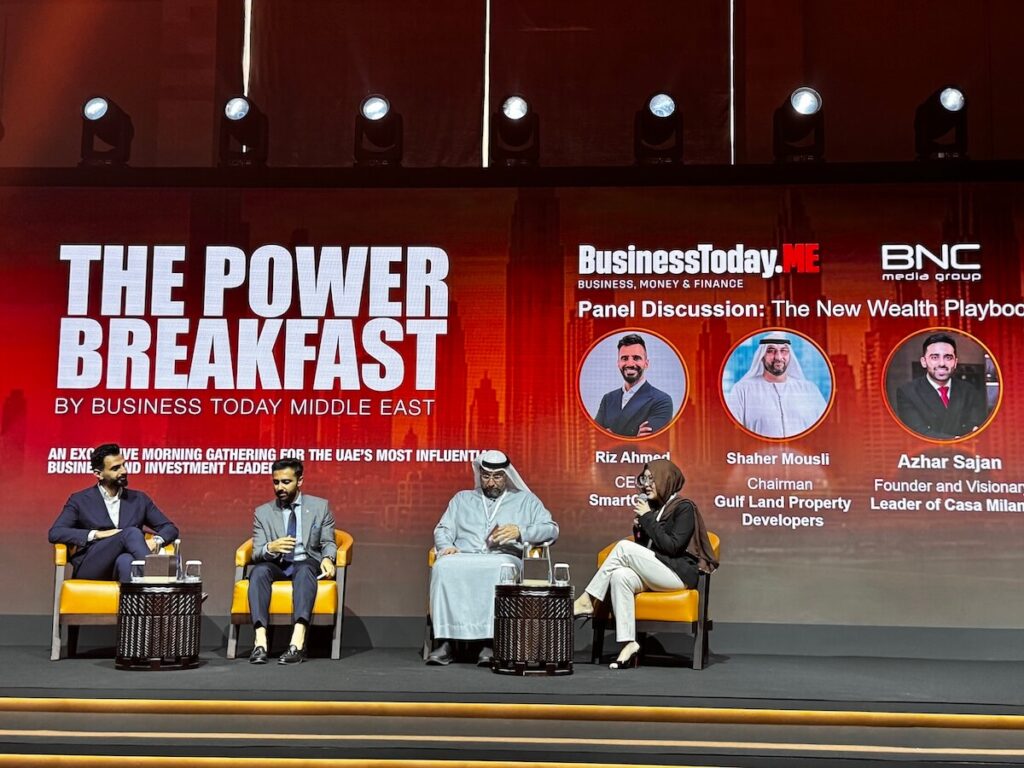
Last week, at the Power Breakfast hosted by Business Today Middle East, Riz Ahmed of Smartcrowd.ae captured it perfectly: “the UAE on a bad day is much, much better than good days in many countries around the world.”
He shared the panel with Azhar Sajan, Director of Casa Milano, and Shaher Mousli, Chairman of Gulf Land Property Developers. While each brought a distinct take on recovery and the road ahead, the trio agreed on one thing without hesitation: the UAE will emerge from this conflict far stronger than before. Having lived here for 19+ years and seen both the highs and the lows first-hand, I can tell you that’s absolutely true.
And the money agrees
This isn’t just sentiment. Through the hardest weeks of the conflict, the world kept backing the UAE with capital:
- Blackstone — the world’s largest alternative asset manager — committed $250 million to Abu Dhabi in March, mid-conflict. It backed ADGT, a new UAE payments and compliance platform, in one of the first inbound private-equity deals struck after the war began — widely reported as a vote of confidence in the country’s future. Blackstone’s president said they see real opportunity to deploy capital at scale here “despite near term headwinds.”
- Dubai approved the AED 34 billion ($9.3 billion) Metro Gold Line on 22 April — mid-conflict — and ordered work to begin immediately. A 42km fully underground line, the largest transport project in the emirate’s history. As one report put it, while the wider region navigated uncertainty, Dubai didn’t pause a single crane. Governments don’t commit nine figures to 2032 infrastructure unless they’re certain of the future.
- Capital kept flowing in both directions, and markets stayed open — even as the shock hit, the UAE’s East Coast ports absorbed cargo surges of more than 20 times their normal flow, and trade and investment continued moving.
- A new Dh1 billion ($272 million) National Industrial Resilience Fund was launched to deepen domestic industry — a government doubling down, not pulling back.
- Global tech kept building here. Microsoft’s $15.2 billion UAE commitment continued through the period, with roughly $7.9 billion of it scheduled across 2026–2029 — long-term money that didn’t flinch. Stargate UAE, the 1-gigawatt AI mega-campus backed by G42, OpenAI, Oracle and Nvidia, stayed on track too.
And this rests on a strong base: the UAE drew $45.6 billion in foreign direct investment in 2024 — up 49% year-on-year — ranking among the top 10 destinations in the world.
When serious institutions keep committing billions through a regional conflict, that’s not hope. That’s a vote of confidence backed by capital. If the biggest players in the world are staying invested in this country, the question for the rest of us is simple: why would we step out?
The Mindset: Positive and Disciplined
The single biggest financial mistake people made after Covid wasn’t losing money in the dip — it was staying out of the recovery because fear had hardened into pessimism.
So the mindset now is two things at once. Positive, because the evidence says this economy comes back. And disciplined, because optimism without a plan is just hope. Protect your foundation first, stay invested, and position yourself to benefit when momentum returns — the way it did last time.
Rework Your Budget First
Before anything else, get your numbers in front of you.
If your income or expenses changed over these months, your old plan is out of date. Rebuild it. The goal is the same as always — a consistent investable surplus — but now you’re working from today’s reality, not last year’s.
If you don’t have a budget, use the Expat Advantage Budget to map a clear 12-month view of your finances.
A simple split to anchor to:
- 50% — needs and wants
- 20% — luxuries
- 30% — savings
(Note: this adapts the well-known 50/30/20 rule for UAE expats — the higher savings weighting reflects no personal income tax and the reason most of us came here: to build wealth faster.)
Why 30%? Disposable incomes here tend to be higher, and our window to save is finite. If you’re not at 30% yet, don’t aim for perfect — just start, and work towards it.
Rebuild your Emergency savings — Priority One
If these months drained your reserves, or showed you they were thinner than you thought, rebuilding them comes before new investing.
An emergency fund is what stops the next shock from forcing you to sell good assets at bad prices. After a period like this, it’s not optional — it’s the foundation everything else sits on. Aim for 3–6 months of expenses in cash you can reach quickly.
Protect the Downside
When a wicket or two falls in cricket, the batsmen on the crease shed the extravagant shots and focus on putting an innings together — singles, twos, the occasional boundary.
In tough times we tend to do the opposite with money: we quietly cut the things that don’t give instant gratification — insurance, protection, long-term cover. That’s exactly backwards.
Now is the time to revisit your protection needs — life cover, critical illness insurance, income protection — so that if the next disruption comes, your family’s launchpad stays intact. A strong foundation is what lets you take sensible risk everywhere else.
Don’t Panic-Sell — Trim and Rebalance Instead
Markets fell. The instinct after a drop is either to freeze or to dump everything. Both usually cost you.
The disciplined move is to rebalance: bring your portfolio back to its target allocation, trim what’s overweight, and top up quality where you’re light. Set greed and fear aside in equal measure — neither makes good decisions.
If you sold in the panic, the lesson isn’t “never invest again.” It’s “build a plan robust enough that you don’t have to react.”
The Quiet Opportunity in a Correction
Corrections are painful, but they reset valuations. Assets that were stretched a year ago are more reasonably priced today.
This is the moment to do your research and look for quality — assets likely to hold value or bounce back quickly — at low or moderate valuations. Not speculation. Not chasing whatever fell hardest. Quality, bought sensibly, while it’s on sale.
A financial or investment advisor can help you assess your risk and match your strategy to it — which matters more after a shock, when emotions run high.
Stay In It
The three levers of wealth are:
- Saving and investing — in your control
- Time — in your control
- Growth — not in anyone’s control, and it arrives sporadically
The hardest months are precisely when people abandon levers one and two — and miss the recovery on lever three. Start where you are, invest regularly, and stay invested. Time in the market beats timing it, and recoveries reward the people who were still in the game.
Powering Up From Here
Adversity doesn’t pause your financial future — it sharpens the case for managing it deliberately. Rebuild the budget, refill the emergency bucket, protect the foundation, rebalance with a clear head, and buy quality while it’s reasonably priced.
We came out of Covid stronger than we went in. There’s every reason to do it again — but only if you stay in the game with a positive head and a steady plan.
That’s what powering up looks like in a year like this one. Not louder. Steadier — and quietly confident.
Ready to rebuild your plan for what’s next? Book a Discovery Call and let’s tailor it to your goals.