The 10 Best Countries to Retire in 2026 (For UAE Residents)
Most “best places to retire” lists are written for people residing in the America or Europe. If you have spent years building a career in the UAE, that advice is hardly relevant.
As a UAE resident
- You may — or may not — have an EU or US passport to fall back on
- Your savings are likely spread across two or more currencies
- Everything you need, want and dream about is within your reach
- And, the big one — you’ve been living and earning tax-free.
Given the above, you may want to choose your retirement destination careful, as getting it wrong may be a difficult decision to reverse.
Here is a list of 10 best Countries to Retire for UAE residents and GCC residents.
A quick note before we start: visa thresholds and tax rules change often, and your own numbers depend on your nationality, assets and where your income comes from. Treat this as a map, not personalised advice. The right destination is the one that fits your plan.

Table of Contents
10 best Countries to Retire
1. The UAE — you may not need to leave at all
Before you look anywhere else, look at where you already are. The UAE now offers a five-year renewable Retirement Visa for residents aged 55 and over. You qualify by meeting one of a few financial routes —
- Property worth AED 1 million plus AED 1 million in savings
- AED 1 million in savings alone,
- or a monthly income of around AED 15,000–20,000 depending on the emirate.
The case is hard to beat: zero income tax on your pension and investments, world-class healthcare, a stable currency pegged to the dollar, year-round sun, and the ability to sponsor your family — all without uprooting the life, friendships and network you’ve spent years building.
Cost of living is the obvious counterpoint, but it’s more flexible than people assume. If you already own your home, your single biggest expense disappears, and a retiree’s budget looks very different from a working family’s.
For many expats who’ve put down roots and bought Dubai property, this is quietly one of the best-value retirement residencies anywhere. Just plan around the renewal conditions and the rule that long absences abroad can affect the visa.
Also read: How to Retire in Dubai / Abu Dhabi? – A Practical Guide.
2. India — climate for every taste, unbeatable value, and world-class private care
For the large NRI community in the UAE, India isn’t just “home” — it’s one of the most tax-efficient places you can retire to, if you time it right. If you hold an OCI card, you don’t need a retirement visa at all; you can live in India indefinitely, a short flight from the friends and business interests you’ve built up in the Gulf.
A climate to match any preference. Few countries offer this much choice.
Crave cool, green hills? The southern hill stations — Coonoor, Ooty, Munnar, Kodaikanal — or the Himalayan foothills around Dehradun and Shimla give you spring-like weather year-round.
Prefer the coast? Goa and Kerala offer warm, laid-back beach living.
Want a temperate big city with culture and connectivity? Chennai, Bangalore and Pune are perennial favourites with retirees for exactly that balance. You can pick your climate rather than compromise on it.
Value that stretches your savings furthest. Of everywhere on this list, India lets a UAE retirement budget go the longest. Comfortable living — including domestic help, dining out and travel — costs a fraction of what the same lifestyle demands in Europe or even Southeast Asia, leaving far more room to enjoy yourself or support family.
Among the best private healthcare anywhere. India is a global medical-tourism destination for good reason. Hospital groups like Apollo, Fortis and Manipal deliver internationally accredited care, English-speaking specialists, and short waiting times, often at a small fraction of Western prices. For retirees, the combination of quality and affordability is genuinely hard to find elsewhere.
And the tax window. The real prize for returning NRIs is RNOR status (Resident but Not Ordinarily Resident). When you’ve been an NRI for several years and move back, you typically qualify as RNOR for two to three financial years — and during that window your foreign income stays outside the Indian tax net (foreign pensions, overseas rent, capital gains on assets sold abroad, interest on foreign accounts). The timing of your return literally changes how many RNOR years you get, so this is worth planning before you book the flight.
3. Portugal — the EU base that’s still within reach
Portugal remains the most accessible route into Europe for someone retiring on passive income. The D7 visa asks for proof of stable passive income — pension, dividends, rent — of around €920 a month in 2026, well under most investment-visa thresholds. After 10 years of legal residence you can apply for permanent residency.
Two things to know as a UAE expat.
- First, citizenship now takes ten years for most non-EU nationals under the law in force since May 2026 — longer than the old five-year story you may have read.
- Second, Portugal taxes residents on worldwide income, and the old NHR tax break is closed to new applicants.
So Portugal is a lifestyle-and-access play, not a tax play. Beautiful, affordable outside Lisbon, walkable, mild — but go in with eyes open on the tax side.
4. Greece — sunshine, Golden Visa, and lifestyle for less
Greece has surged to the top of several 2026 retirement rankings, and it’s easy to see the appeal: 300-plus days of sun, a relaxed pace, and a cost of living that undercuts Spain and Portugal in many areas. A couple can live comfortably on a modest budget once you step outside the prime islands and central Athens.
For residency, the Golden Visa (a property-based investment route) suits those who want flexibility without full-time relocation, while the passive-income route works for retirees who’ll actually live there. Healthcare in Athens and Thessaloniki is solid, and many doctors trained abroad and speak English. As always, confirm the current investment thresholds before committing — they’ve risen in popular zones.
5. Thailand — affordability and proximity, two hours closer than Europe
Thailand has been a retirement favourite for decades for good reason: warm year-round, genuinely affordable, excellent private healthcare at a fraction of Western prices, and a direct, manageable flight from the Gulf.
The classic O-A retirement visa (age 50+) asks for a deposit in a Thai bank or qualifying monthly income, while the newer Long-Term Resident (LTR) visa offers a ten-year option with no mandatory property purchase. A couple can live well on a fraction of a Dubai budget, with Chiang Mai and smaller coastal towns offering particularly strong value. Watch the recent changes to how foreign income remitted into Thailand is taxed — get advice on how you bring money in.
6. Malaysia — familiar, English-speaking, but pricier than it used to be
Malaysia is comfortable for UAE expats: English is widely spoken, there’s a large Indian and international community, no tax on most foreign income kept offshore, and Kuala Lumpur and Penang offer modern living at reasonable cost.
But be careful with old articles — the MM2H programme was overhauled and is now considerably more demanding. The mainland tiers (Silver, Gold, Platinum) require a sizeable fixed deposit in USD and a mandatory property purchase, with a 10-year sale restriction on that property. The entry-level Silver tier alone ties up a substantial sum. The more flexible, income-based route now sits with Sarawak’s S-MM2H. Malaysia is excellent for the right profile — just price the real capital commitment before you fall in love with it.
7. Spain — Mediterranean living with a clear residency path
Spain offers sun, culture and world-class healthcare, with established expat hubs in Madrid, Barcelona, Málaga and the Costa del Sol where English-speaking doctors are easy to find. The Non-Lucrative Visa is the standard retirement route, requiring proof of substantial annual passive income (and no work in Spain).
The trade-off, again, is tax: Spanish residents are taxed on worldwide income, and wealth taxes apply in some regions. For a UAE expat used to zero income tax, that’s a real adjustment to model before you move — but for many, the lifestyle and healthcare justify it.
8. Mauritius — the quiet favourite for NRIs and Anglo-Indian retirees
Mauritius rarely makes the American lists, but it deserves a spot on yours. It’s English- and French-speaking, has a large population of Indian heritage, direct flights from Dubai, excellent private healthcare, and — crucially — no tax on foreign-source income that isn’t remitted, plus no capital gains or inheritance tax.
The retirement permit is straightforward, typically requiring proof of regular income transferred into the country. For a UAE retiree who wants warmth, safety, a tax-friendly base and an easy cultural fit, Mauritius is one of the most overlooked options on this list.
9. Georgia — keep the tax-free lifestyle, just somewhere new
If the thing you’d miss most about the UAE is not paying income tax, Georgia is worth a serious look. It runs a largely territorial tax system — foreign-source income is generally not taxed — residency is easy to obtain, the cost of living is very low, and Tbilisi has become a hub for location-independent professionals.
It’s less polished than Western Europe and the healthcare network is thinner, so it suits active, healthy early retirees more than those needing intensive medical support. But for preserving a tax-free lifestyle on a modest budget, few places compete.
10. Cyprus — EU access with an English-speaking, tax-friendly twist
Cyprus blends Mediterranean living with practical advantages for expats: English is widely spoken (a legacy of British ties), there’s a large established expat community, and the tax regime is notably friendlier than mainland Europe — including attractive treatment of foreign pensions and a non-domicile status that exempts certain investment income for a number of years.
It’s an EU member, so you get European healthcare and travel access, with a slower, sunnier pace than the big European capitals. For UAE expats who want Europe and a softer tax landing, Cyprus is a smart middle path
The option many residents actually choose: a blended life
Here’s what often gets missed in a list like this — you don’t have to pick one country at all. In practice, many UAE and GCC retirees split their year between the Emirates and their home country, and keep the best of both.
The logic is simple. You hold onto your UAE base — the zero income tax, the world-class healthcare, the banking, the network and the property you already own — while spending part of the year in your home country, close to family, in familiar surroundings, and at a lower cost of living. For many, it also means escaping the Gulf summer: out during the hottest months, back for the long, pleasant winters.
For NRIs especially, the blended model can do double duty. Carefully managing the months you spend in each place can help you stay non-resident (or RNOR) for tax in India while keeping your UAE residency alive — protecting your foreign income on both sides for as long as the rules allow.
It does need real planning, though, because three sets of rules collide:
- UAE residency — the retirement visa can lapse if you stay outside the country too long at a stretch, so your travel pattern has to respect that.
- Home-country tax residency — day counts matter. India’s 182-day rule, the UK’s Statutory Residence Test, and similar tests decide whether you stay tax-light or accidentally become a full tax resident.
- Healthcare and currency — you’ll want cover that works in both countries, and a sensible way to hold and move money across currencies without losing value to conversions.
Get the calendar and the structure right and a blended life genuinely is the best of both worlds. Get it wrong — a few extra weeks in the wrong place — and you can trip a tax residency you didn’t intend. This is the single most common area where good planning pays for itself many times over.
Whichever you choose, health cover is non-negotiable
One thread runs through every option here: comprehensive private health insurance. Most retirement visas — across Europe, Southeast Asia and the UAE — require proof of it as part of the application. And even in countries with strong public systems, new residents often face a waiting period before they can access state care, leaving a gap that only private international cover fills.
For an expat in your 50s or 60s, this is also where age and timing matter most — premiums and underwriting get tougher the longer you wait. It’s worth structuring your health cover alongside your visa and tax plan, not as an afterthought once you’ve arrived.
And don’t stop at medical cover. Critical illness cover does a different — and arguably more important — job in retirement. Health insurance pays the hospital; critical illness cover pays you a lump sum on diagnosis of something serious like cancer, a heart attack or a stroke.
That money is yours to use however you need: to travel for the best treatment, to cover the months of living costs and care that insurance never touches, to protect your spouse from having to dip into capital, or simply to remove money worries at the worst possible time. The catch is the same as everything else here — it gets harder and dearer to obtain with each passing year and each new health condition, so the time to lock it in is before you retire, not after a diagnosis when it’s no longer an option.
A few honest words on the tax question
If there’s one takeaway, it’s this: after years of tax-free income in the UAE, where you retire is a tax decision as much as a lifestyle one. Two retirees with identical savings can end up with very different incomes depending on whether they chose Georgia or Spain, or whether an NRI timed their India return to capture the RNOR window. The lifestyle is the easy part to picture; the tax and currency mechanics are where a year of planning can be worth years of income.
The silent threat: inflation over a 30-year retirement
Choosing the right country sorts out today’s cost of living. The harder question is what that cost looks like in 15 or 25 years — because a modern retirement can easily last three decades or more, and inflation quietly works against you the entire time.
The maths is sobering. At just 5% annual inflation, prices roughly double every 14–15 years. So the comfortable budget that buys a great life in Lisbon or Bangalore at 60 may buy barely half as much by the time you’re 80 — at exactly the stage when you can least afford to economise. A “cheap” country today is no guarantee of a cheap country for life; many of the most popular expat destinations have seen the steepest rises precisely because they became popular.
For UAE and GCC expats there are two extra layers most lists ignore:
- Currency risk compounds it. If you’ve saved in dirhams or dollars but plan to spend in a home currency that tends to weaken over time, you face inflation and depreciation together — a double erosion of what your savings actually buy.
- Healthcare inflates fastest of all. Medical costs typically rise faster than general prices, and your need for them grows as you age — the one expense almost certain to climb just when it matters most.
The practical lesson is that cash is not safe over a retirement this long; sitting in deposits, it loses purchasing power every single year. A plan built to last needs a growth engine — assets that are expected to outpace inflation over time — so your income keeps its real value, not just its headline number. Picking the destination is step one; making sure your money still stretches there in 2046 is the part that actually protects your retirement.
Build wealth that travels with you — and passes on cleanly
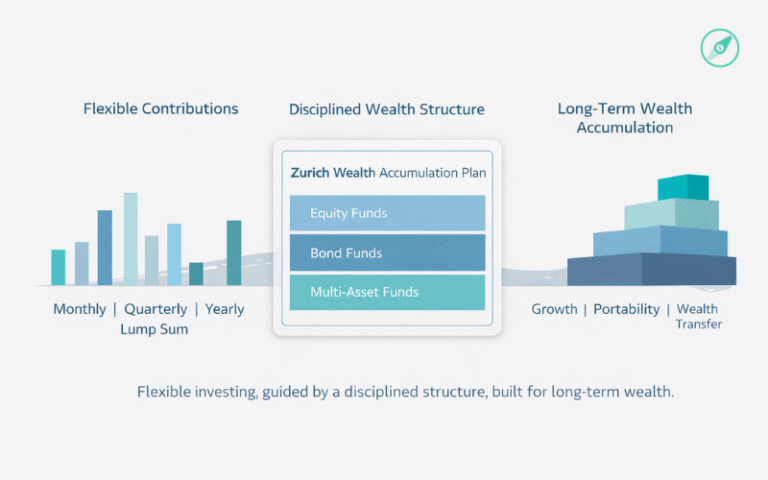
There’s one more thing that separates expat retirement planning from the version in those American lists: your wealth has to be portable. You may move once, twice, or split your time across borders for the rest of your life.
Money that’s locked into a single country’s pension system, tied up in property you can’t easily sell, or sitting in a currency you’re not spending, quietly works against you. The goal is wealth you can hold, grow and draw from wherever you happen to be — currency-flexible, accessible across jurisdictions, and not hostage to any one country’s rules.
The second half of this is often ignored until it’s too late: making sure your wealth distributes seamlessly to the people you love. Expats are uniquely exposed here. Assets scattered across the UAE, your home country and perhaps Europe can mean multiple probates, long delays, and — in the UAE specifically — succession rules that may not reflect your wishes unless you’ve structured things deliberately.
Clear beneficiary nominations, the right wills in the right jurisdictions, and structures designed to pass on directly can be the difference between your family receiving their inheritance in weeks rather than fighting for it over years.
Portability and clean succession aren’t add-ons to a retirement plan — for an expat, they are the plan. Build both in from the start and you keep your freedom to move and the certainty that what you’ve built ends up where you intend.
Start your next chapter with a plan, not a guess
The best retirement destination isn’t the one that scores highest on a list — it’s the one that fits your nationality, your assets, your family and your tax position. That’s the part worth getting right before you commit.
If you’d like to map your own numbers — income sources, currencies, visa fit and the tax angle for your specific situation — book a discovery call and we’ll build it around your plan.
Frequently Asked Questions
Do I need to leave the UAE to retire? No. The UAE offers a five-year renewable Retirement Visa for residents aged 55 and over who meet the property, savings or income criteria, letting you keep your tax-free status and existing life in place.
Which is the most tax-friendly country for a UAE expat to retire to? It depends on your income sources, but the UAE itself (zero income tax), Georgia (territorial tax), Mauritius (no tax on unremitted foreign income) and Cyprus (non-dom status) are among the strongest for preserving a tax-free or low-tax lifestyle. For NRIs, India’s RNOR window offers two to three years of foreign-income relief if timed well.
As an NRI, do I need a retirement visa to move back to India? If you hold an OCI card, no — you can live in India indefinitely. The key planning point is your tax residency status (NRI → RNOR → resident) and timing your return to maximise the RNOR foreign-income window.
Is Malaysia’s MM2H still an affordable retirement option? Less than it used to be. The relaunched MM2H now requires a substantial USD fixed deposit and a mandatory property purchase across its mainland tiers, with a 10-year sale restriction. The income-based Sarawak S-MM2H route is the more flexible alternative.
Can I split my retirement between the UAE and my home country? Yes — and many residents do. A blended life lets you keep your UAE base and its tax-free, high-healthcare advantages while spending part of the year at home near family. The key is managing the calendar so you respect the UAE retirement visa’s stay rules and don’t accidentally trigger full tax residency in your home country.
Will my retirement visa require health insurance? Almost always. Comprehensive private health insurance is a standard requirement for retirement visas in Europe, Southeast Asia and the UAE, and it’s wise to arrange it early while premiums and underwriting are more favourable.
This article is general information for UAE-based expatriates and does not constitute personalised tax, legal or financial advice. Visa rules and tax thresholds change frequently — verify current requirements with official sources and a qualified adviser before acting.